Wednesday, 1 March 2017

How To Boost Vegetable Production For Export – Experts - www.epoteblogspot.com.ng

Vegetables are very nutritious crops widely cultivated and consumed by humans around the world.
It has been recently reported that vegetable scarcity has hit the European Union (EU) countries due to bad weather, among other factors, which negatively affected production.
Many stakeholders in the agricultural sector are of the opinion that this development presents a great opportunity for Nigerian vegetable farmers to increase their production and export the excess to earn foreign exchange in order to tackle the current economic recession.
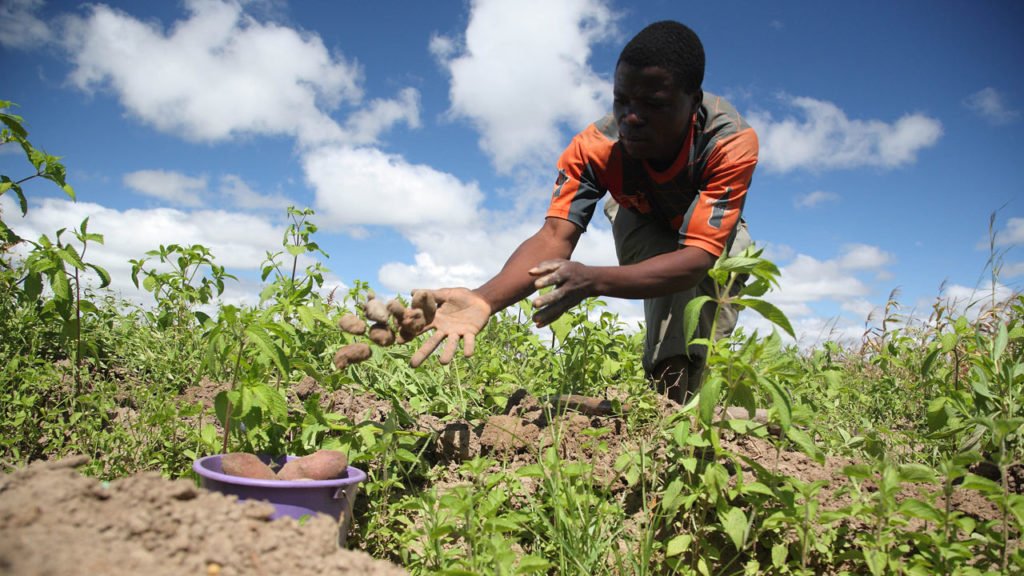
Vegetable farmers and other experts have suggested various ways to boost Nigerian vegetable production for home consumption and export to the EU and other countries where the produce is in high demand.
One of the farmers, Mr. Terver David, who farms assorted vegetables in over 15 greenhouses, told our reporter that presently, meeting local demand is difficult, so attempts to export require heavy investments in irrigation and inputs such as seeds and fertilizers, among others.
“Farmers should be given soft loans and adequate arrangements for buy back by the government and other off-takers for export as most of the farmers will find it difficult to handle export matters,” he advised.
Another farmer, Mrs. Mary Daniel, pointed out that there was serious need for awareness creation and the farmers should be properly trained on how to produce vegetables especially for export.
“Extension agents should be deployed to identified export farms so as to teach the farmers how to increase the production of good quality vegetables,” she noted.
Commenting on the issue, an agronomist, Mr. Simon Idoko, said farmers should be given adequate incentives by the government to practice all-year-round vegetable farming in order to produce enough for export.
He advised farmers to seek help from experts and follow good agronomic practices so as to get good quality produce that can compete favaourably in the international market.
“Farmers should use acceptable levels of approved pesticides on their crops so as to avoid produce rejection by buyers,” Idoko warned.
On produce standardization and labeling, Prince Peter Bakare, an official of the Federation of Agricultural Commodity Associations of Nigeria (FACAN), said the group was set to invite the EU to train farmers across the value chains on how to produce standard farm produce.
“After training, the farms will be certified and any produce from such farms will be acceptable and labelling will be done as well for identity,” he said.
Even as anonymous sources at the Farm Inputs Support Services Department of the Federal Ministry of Agriculture and Rural Development maintain that the government has being creating awareness on increased vegetable production and giving inputs to farmers, checks revealed that fertilizer and seed distribution has been hampered by huge debt owed input suppliers and agro-dealers since 2014.
Findings showed that Anambra State exported vegetables worth $5million to Europe last year, while Ghana and some African countries have been exporting vegetables and other farm produce to EU and other countries over the years.

Chinese Govt Demands Dry Yam From Nigeria - www.epoteblogspot.com.ng

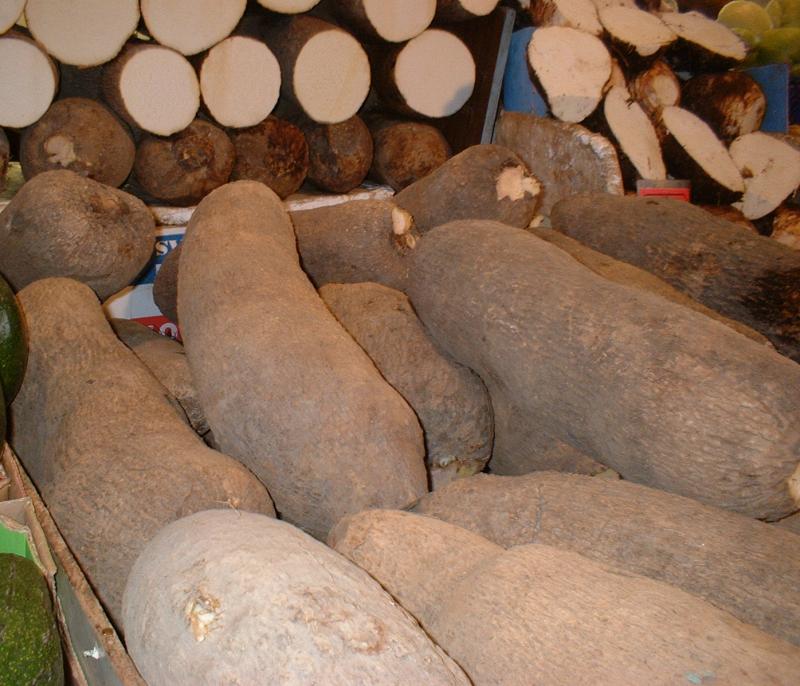
The Chinese government has demanded dry yam from Nigeria to meet industrial and domestic needs.
This was disclosed by the Minister of Agriculture and Rural Development, Chief Audu Ogbeh, Thursday, in Abuja, which a technical working committee was inaugurated to fast track the exportation of yam by July 2017.
The Minister said Nigeria has remained one of the world’s largest producer of yam, which accounts for 61.7 per cent of the global production of the rot crop, while there are over 60 varieties of yam, but sadly, Nigeria not among yam exporting countries.
He assured that local production and consumption of the commodity would not be affected by the move to export yam soon, rather government would scale up intervention in yam production, as farmers in the country have indicated willingness to increase production to meet both local and international demands.
Governor Samuel Ortom of Benue State
He noted that high level of yam production was going on in Zakibiam in Benue State, the Minister said government would leverage on it and also spread production across the entire country.
However, he lamented Ghana, which produces far less than any yam producing state in Nigeria, has taken over the European market.
According to him yam consumed in the United States were imported from Ghana and a tuber of yam cost as high as $15.
He said: “Ghana is controlling Africa’s yam export market where Nigeria is one of the world’s largest producers. I am not sure if Ghana produces as much yam as any state of the federation”.
The Minister noted that the private sector driven committee was deliberate in other to guide the government on how to get a fair share of the global yam market.
He noted that the Nigerian yam export promotion programme was aimed at taking Nigerian yam production, processing and marketing to next level in line with what is done in other country.
He also emphasised the need to ensure that Nigerian agricultural produce meet the standard of foreign markets, and stressed the need for the country to design produce that would meet Nigerian health standard.
Chief Audu Ogbeh
The minister tasked the committee to develop a framework for establishment of Nigeria yam export sea and airport where all documentation relating to the export are prepared, adding that they should facilitate acquisition warehouses at the receiving destination, rationalize the bureaucracy of export and enforcement agency located within one roof designated for Nigeria yam export park houses.
Meanwhile, the Chairman of the Committee, Prof Simon Tsange, said they have been doing underground work on the programme adding that the committee would ensure that in six months time, Nigerian yam would hit the international market.

Expert Tasks Nigerians On Agric Wastes - www.epoteblogspot.com.ng

Professor of Animal Nutrition, Michael Okpara University of Agriculture Umudike (MOUAU), Abia State, Dr Gbolagunte Sunday Ojewola, has described the volume of wastes generated from agriculture activities, as an area of sustainable agricultural investment and an easy tool for providing employment for Nigerians.
Agric wastes
Ojewola, who stated this during the 25th inaugural lecture of the university, said agriculture is still the major supplier of food to human kind and mainstay of the nation’s economy, but its wastes have for long, been neglected, especially livestock wastes, “which is an easy tool for procuring employment and a major way of preserving generations of wealthy and healthy Nigerians when properly put to good use.”

He referred to the World Health Organisation’s (WHO) report (1972) and Khoshoo of 1986, saying the real danger from poor waste disposal lies in the future, which he said “may be that the generation of wastes may have long since gone, before the problem begins.”

According to him, many of the environmental incidents that are causing concern now are legacies of the past, caused by the generation that is no longer active in the work force.
He pointed out that it is now the responsibility of all to develop, police and maintain safe waste disposal system, and not leave behind a lethal inheritance.
Consequently, he recommended that efforts should be made to identify the identity, exact quantities, nature and disposal of agro wastes that are being generated from major and minor agricultural activities all over the country.

ECOWAS Advances 10-year Investment Plan On Emerging Agric Issues - www.epoteblogspot.com.ng

The Economic Community of West African States (ECOWAS) has developed a 10-year Regional Agricultural Investment Plan (RAIP), to address emerging issues, such as climate change, nutrition and gender aspects of agriculture, towards the promotion of food security in West Africa.
Director of Environment, ECOWAS Commission, Dr. Johnson Boanuh, who disclosed this at a 2-day Consultative Regional Committee for Agriculture and Food workshop, said the new or second generation RAIP, precedes the commission’s initial 5-year plan, which aimed at identifying agricultural excesses in the region, and ensuring distribution of the excesses to areas within countries and the region that suffer food shortages.
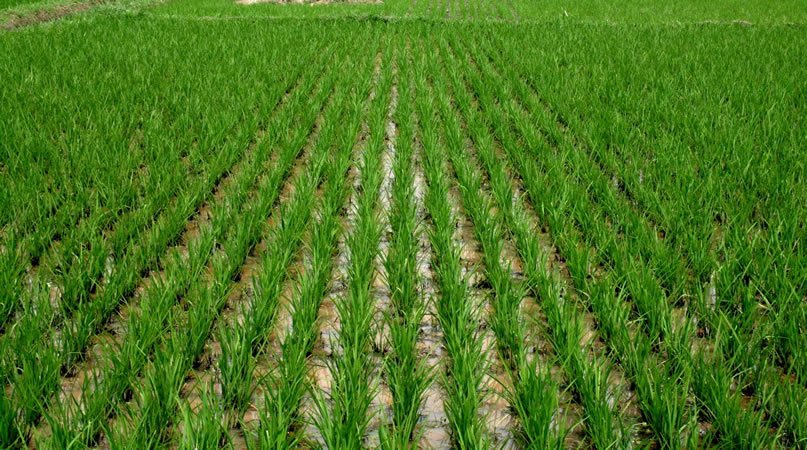
With the plan, which runs from 2016 to 2025, the region has identified seven emerging agricultural issues global-wise, new ideas, and aims to integrate these issues into the plan for perusal and adoption by ECOWAS members state’s Ministers of Agriculture.
According to Boanuh; “with the current plan, we will consider various gender groups, the nutrition aspect-an important aspect that will help us produce nutritionally balanced foods, that address a lot of health challenges, ensuring people are fed at the right time, with the right food, which prevents diseases.
“It also factors in the effects of climate change on food production and availability. Climate Change has become an emerging global issue. Therefore, we are paying serious attention to climate smart agriculture-which looks at how to make our agriculture responsive to climate challenges.”
To guarantee an encompassing approach, ECOWAS has helped member countries in establishing National Agriculture Investment Plans (NAIP), which dovetails with the RAIP. Funds are mobilised by member states government, and with development partners within the states, as well as, across the region.
Boanuh also said that ECOWAS has set up a Regional Agricultural Agency, located in Lomé, Togo, where mobilised funds will be managed by the agency and made available to various national groups to assist in the improvement of their agricultural productivity.
Identifying the successes of the five-year RAIP plan, Boanuh added that there has been a general increase in cereal production, agriculture information systems, animal husbandry and animal health approaches.He however, noted that only member states could identify their peculiar successes, via productivity increase, within the last five years.

BUA Group Partners Kano Farmers To Boost Local Rice Production - www.epoteblogspot.com.ng

In fulfillment of the Federal Government’s policy of boosting rice production in Kano State, the BUA Rice Ltd, a subsidiary of BUA Group, is partnering the state branch of Rice Farmers Association of Nigeria (RIFAN), to actualise the dream.
The Group Executive Director, Strategy and Innovation, of the company, Kabiru Rabi’u said it remains committed to the government’s resolve to reduce the nation’s dependence on imported rice by boosting local capacity to produce, process and package.
According to him, the partnership would support the rice farmers to take advantage of the Central Bank of Nigeria (CBN) Anchor-Borrowers Scheme, adding that BUA will provide end-to-end support to the value chain in ensuring that its milling facilities are being utilised optimally.
“Currently, BUA’s rice mill, which was supplied by Satake Japanese Technology, is the largest rice mill in Nigeria, with a total processing capacity of about 200,000 metric tonnes per annum,” he said.
Rabiu emphasised that they needed to encourage dry season rice farming, assuring the chairmen of the rice farmers association across the 44 local farmers, that farmers would enjoy the partnership, as it would do everything possible to see that good price is given to farmers, apart from fertiliser supply, inputs and other implements.
Chairman of RIFAN, Abubakar Ali, assured the company of their commitment and dedication to any agreement reached.He revealed that Kano had over 500,000 rice farmers with over 40,000 of them, fully registered with the association, assuring that the initiative will see to the improved yields, as well as, reduce wastage currently being experienced due to insufficient processing and storage facilities.